


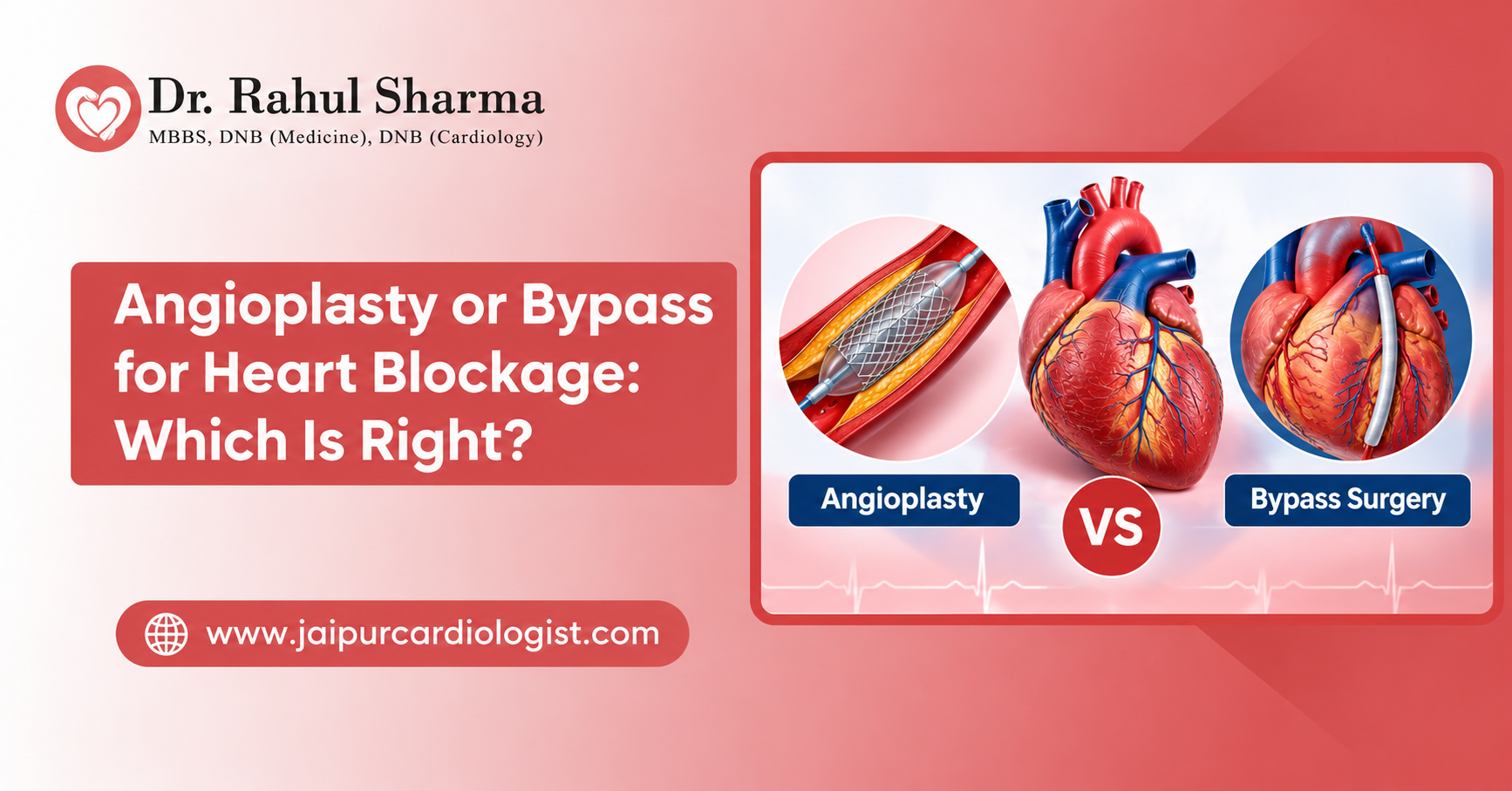
Angioplasty or Bypass for Heart Blockage: Which Is Right?
It can be scary to learn that a heart artery is blocked. The next question is usually, “Do I need angioplasty or bypass surgery?” Both treatments improve blood flow to the heart, but they do this in different ways. This choice is based on the location and severity of the blockage, and on your overall heart health. Understanding angioplasty or bypass for heart blockage can help you speak more clearly with your cardiologist.
What Does a Blocked Heart Artery Mean?
The coronary arteries bring oxygen-rich blood to the heart muscle. Plaque can build up slowly inside these arteries, narrowing the passageway. If the narrowing is severe enough, the heart may not get enough blood, especially when you’re active.
Some people say:
- Chest pain or heartburn
- Shortness of breath on exertion/walking
- Unexplained fatigue
- Arm, shoulder, jaw, or back pain or discomfort
- Decreased stamina
Sometimes it is found that a person has a blockage even when there are no symptoms.
How Does Angioplasty Work?
Angioplasty is done through a blood vessel, so it does not require opening the chest. A thin tube is guided towards the blocked artery. A small balloon is then inflated at the narrowed area to improve blood flow. In many cases, a stent is left in place to keep the artery open.
Angioplasty or Bypass for Heart Blockage may involve angioplasty when:
- A blockage can be reached safely with a catheter
- Blood flow needs to be restored quickly
- A person is having a heart attack
When Is Bypass Surgery Used?
Bypass surgery takes another route. Instead of opening the blocked section, the surgeon uses a healthy blood vessel from another part of the body to create a new path for blood to reach the heart.
It can be useful when:
- Several arteries are badly narrowed
- The blockages are complex
- An important coronary artery is affected
- Angioplasty is unlikely to give a satisfactory result
Bypass is major surgery, so recovery usually takes longer. The hospital stay and recovery period depend on the person’s health and the type of surgery performed.
Angioplasty or Bypass for Heart Blockage: How Is It Decided?
There is no universal answer. Two people can have heart blockage but need completely different treatments. Your angiography gives the cardiologist a detailed picture of the arteries and helps show where the problem lies.
Other things that matter include:
- Number of blocked arteries
- Exact location of the blockages
- Severity of narrowing
- Heart pumping function
- Other health conditions
- Previous heart procedures
That is why Angioplasty or Bypass for Heart Blockage should be decided after looking at the complete cardiac picture
What Role Does Blood Pressure Play?
High blood pressure can put extra strain on the walls of the arteries. When Hypertension blocked arteries are present, controlling blood pressure becomes an important part of managing overall heart risk.
Cholesterol is another factor doctors watch because plaque can build up inside the arteries. Regular checks can help identify these problems and guide treatment.
Why is it important to control high blood pressure?
High blood pressure often goes undetected. Someone can feel perfectly fine and still have high readings. Over time, the heart may develop hypertension heart damage because it has to work harder to pump blood. Simple habits can help:
- Keep an eye on your blood pressure
- Take prescribed medicines on time
- Reduce salt intake
- Keep active as advised
- Don’t smoke
- Keep regular follow-up appointments
What is the impact of BP on heart health?
Knowing how BP affects heart if you also have cholesterol problems, diabetes, or a family history of heart disease. High blood pressure means the heart has to pump harder and, over time, can damage the blood vessels. Following your treatment plan and making changes your doctor recommends can help you keep these risks in check.
What about high blood pressure and cholesterol?
High BP and cholesterol are two different risk factors, but they both can cause problems with the heart and blood vessels. High blood pressure exerts additional force on the walls of your arteries, and high cholesterol can help build up plaque. Depending on your results, your doctor may recommend blood pressure tests, cholesterol tests, medications, or lifestyle changes.
Meet Dr. Rahul Sharma
Dr Rahul Sharma will evaluate your symptoms and angiography reports, heart function, and the location of the blockage, and discuss the treatment options. If you are looking for an angioplasty doctor in Jaipur , he will explain the procedures available and why one might be recommended for your condition.
Making the Decision on Treatment
Not every blockage can be treated the same way. All your reports, heart function, your symptoms, and general health are important. Your cardiologist will review these details and then decide on Angioplasty or Bypass for Heart Blockage. Before you begin treatment, ask why the procedure is necessary and what to expect during recovery.

